Kristin's Story
Kristin's page should work like a table of contents with a point of view: a clear story, enough context to understand it, and doors into the deeper stories.
At the family level, Kristin is part of the line that runs from Palmer and Signe through Rodney and into the current Stadum branches. At the story level, her page is about motion between places and motion through public work. Cambridge, Ohio is the beginning place. Bowling Green adds the college and BGSU layer. Longmont, Virginia, and Washington, D.C. become place markers in a life map that should eventually connect to photos, documents, recollections, and evidence-backed dates. D.C. is especially important because several public references point back to it: writing about home, book access work, public-service networks, podcasts, and volunteer activity.
The strongest public theme so far is books as a form of care. The D.C. Books to Prisons reference connects Kristin to the practical work of getting books to incarcerated readers. The 2,000 Libros material expands that same theme outward: Spanish and bilingual books gathered for children separated from their families or held in shelters. Those two threads should not be flattened into one sentence on a biography page. They are separate but related story objects. Together they show how reading, dignity, childhood, confinement, and public service can become one living story.
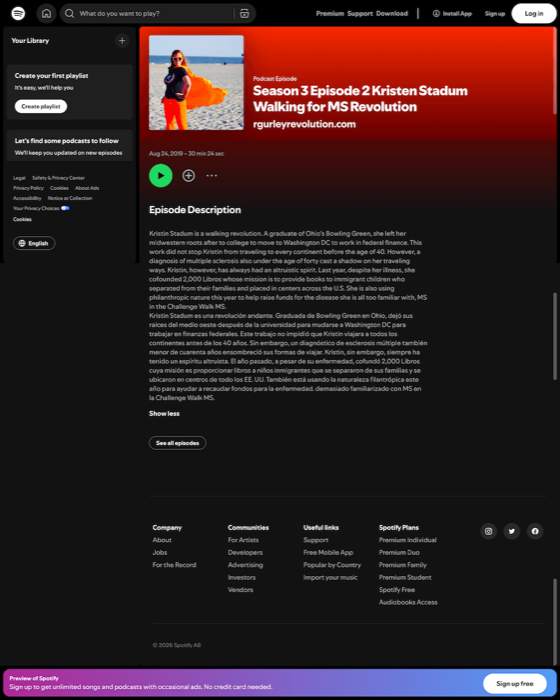
A second major story is walking, MS, and public service. The Spotify screenshot and related links connect Kristin to a podcast story about walking, illness, fundraising, and 2,000 Libros. That story needs its own page because it is not just a health note and not just a podcast link. It is a story about the body, public purpose, endurance, and how private experience can turn into visible action. The National MS Society reference belongs there, as do any family-approved notes that clarify what should and should not be said publicly.
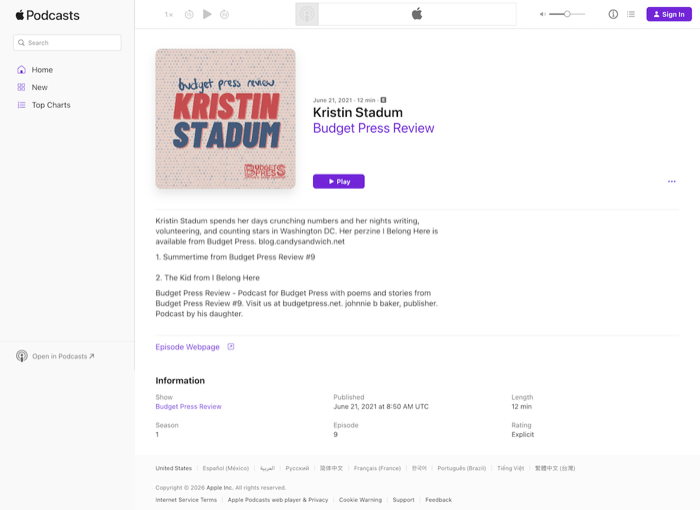
A third story is writing and public voice. The Medium link, Goodreads profile, Budget Press Review screenshot, Roll Call reference, BGSU material, FAA podcast link, National Geographic travel writing, and D.C. references all point toward a person who is not only appearing in references but making language part of the story. Some of these references may turn out to be central; others may remain reference material. The pillar should name the pattern without overclaiming. The writing story can later sort them into college writing, D.C. writing, travel writing, books and reading, podcasts, and public communication.
The media layer matters because this archive is not just text. The Apple Podcasts screenshot, Spotify screenshot, local Kristin video, and YouTube reference should be treated as story evidence, not decorations. Each one has a job. Screenshots preserve the state of outside platforms that may change. Video gives the page family media. External audio and video references connect the family archive to public platforms. When transcripts are captured and reviewed, those media items can feed the timeline, reference list, and future NotebookLM audio packet.
This page therefore has a specific job: orient the reader in about one page of meaningful narrative, then hand them to the graph, timeline, map, media, audio placeholder, and related stories. It should be long enough to explain why the pieces belong together, but not so long that the reader loses the system. If new references appear, the question is not "Where do we paste this?" The question is "What story does this strengthen, and does it deserve a page of its own?"